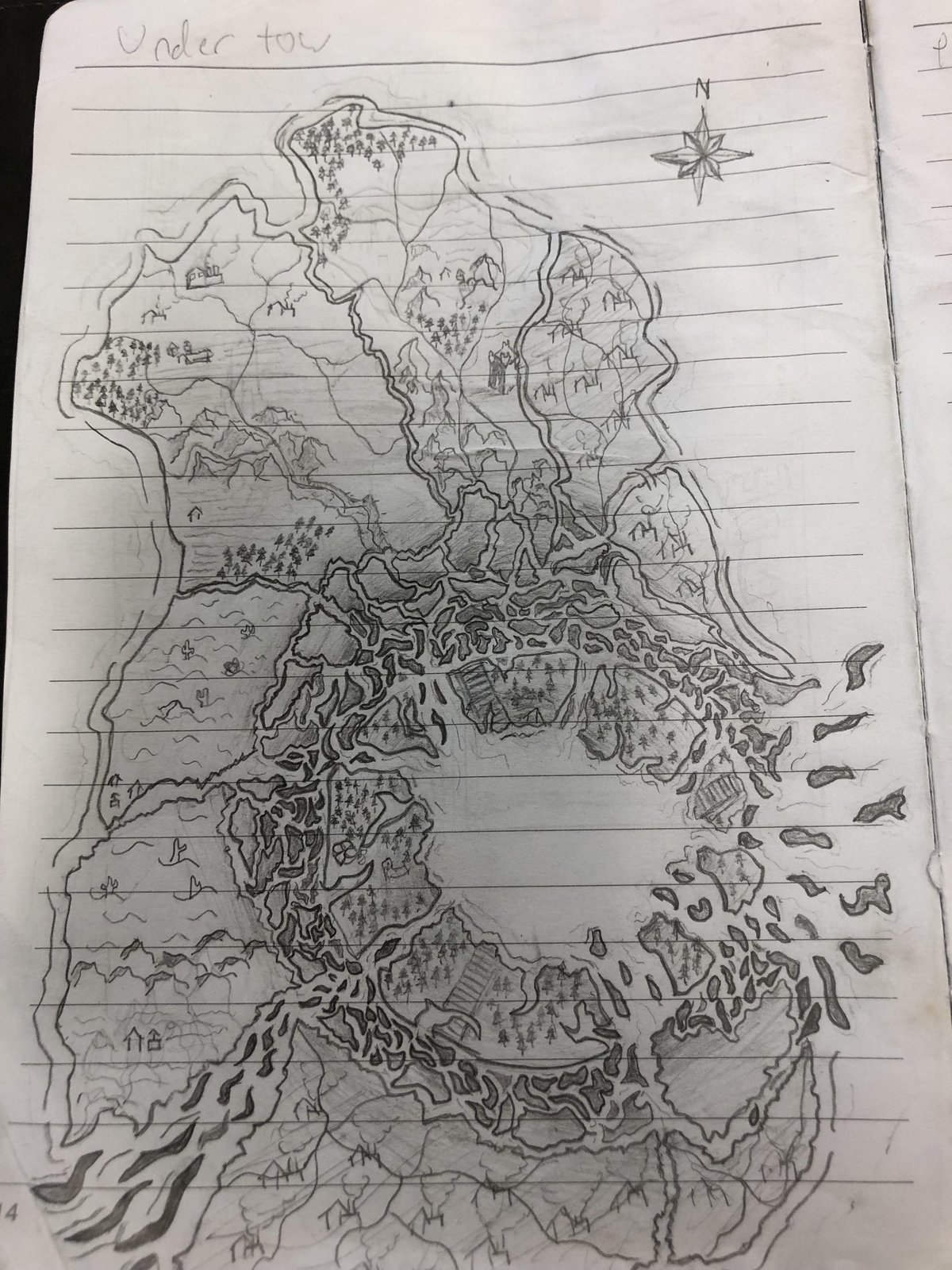
In the heart of every unforgettable story lies a secret: a vibrant, breathing world that feels as real as our own, filled with histories, cultures, and perhaps, impossible powers. Crafting such a world isn't just about dreaming up cool ideas; it's about meticulously weaving together Lore, Worldbuilding & Magic into a cohesive tapestry that captivates and convinces your audience. This isn't merely background dressing; it's the very foundation upon which compelling narratives are built, characters come to life, and mysteries unfold.
It's the difference between a fleeting fantasy and a universe that fans spend years exploring, discussing, and falling in love with. Ready to build something truly special? Let's dive in.
At a Glance: Crafting Your Story's Universe
- Understand the "Trinity": Lore (the backstory), Worldbuilding (the environment), and Magic (the unique rules) are interconnected, not separate.
- Balance Hard & Soft Magic: Decide if your magic needs strict rules (Hard) for problem-solving or a sense of wonder (Soft) for atmosphere.
- Define Magic's Core Elements: Establish its source, rules, who can use it, and its impact on society.
- Build with Intent: Every element of your world, from geography to culture, should serve your story and themes.
- Show, Don't Info-Dump: Weave lore subtly into your narrative through character actions, dialogue, and environment.
- Embrace Tools: Utilize dedicated software to organize complex world details and collaborate effectively.
- Consequences are King: Ensure your world's systems, especially magic, have tangible effects on characters and society.
Laying the Foundation: Why Lore, Worldbuilding & Magic Matter
Think about the stories that stick with you. They aren't just about heroes and villains; they're about the places those heroes and villains inhabit. A deep, rich world provides context, gravitas, and endless possibilities for conflict and character development. It gives your story roots.
The World as a Character
When your world feels real, it essentially becomes another character in your story. Its history influences characters' motivations, its geography dictates travel and warfare, its societal norms create conflict, and its magic system offers unique challenges and solutions. Without this depth, your characters might feel untethered, and your plot, coincidental.
Moreover, a well-built world fosters immersion. It allows your audience to suspend disbelief, to step beyond the page or screen and genuinely inhabit the story you're telling. This connection is paramount for engagement and lasting impact.
Demystifying the Trinity: Lore, Worldbuilding, and Magic Explained
These three terms are often used interchangeably, but understanding their distinct roles—and how they interweave—is crucial for effective creation.
Worldbuilding: The Blueprint of Existence
Worldbuilding is the comprehensive act of creating the physical, cultural, and political landscape of your fictional setting. It's the architecture of your universe.
- Geography: Mountains, oceans, climates, cities, biomes.
- Societies: Cultures, governments, economies, social structures, class systems.
- History: Key events, major wars, technological advancements, pivotal discoveries.
- Flora & Fauna: Unique plants, creatures, and their ecosystems.
- Infrastructure: Roads, communication, transportation.
Essentially, worldbuilding answers the question: What is this world like?
Lore: The Echo of Time
Lore refers to the established body of knowledge, myths, legends, and historical events that exist within your constructed world. It's the cumulative memory and narrative of your setting, passed down through generations or recorded in texts.
- Ancient Prophecies: Stories of chosen ones or impending doom.
- Cultural Myths: Tales explaining the creation of the world or the origins of powers.
- Historical Events: Wars, treaties, discoveries that shaped the present.
- Character Backstories: Personal histories tied to the world's past.
- Rumors & Superstitions: Unverified beliefs that influence daily life.
Lore answers: What stories does this world tell itself, and what has happened within it?
Magic: The Fabric of the Impossible
Magic is any supernatural force or phenomenon that defies the known laws of physics within your world. It's the extraordinary element that sets your story apart, but it still needs its own internal logic.
- Powers: Abilities characters possess (e.g., flight, telekinesis, elemental control).
- Rituals: Specific actions or incantations required to invoke magic.
- Artifacts: Objects imbued with magical properties.
- Creatures: Beings with supernatural traits.
- Phenomena: Unexplained natural occurrences with magical roots.
Magic answers: What impossible things are possible here, and how do they work?
The Interplay: Imagine your world (Worldbuilding) has a vast, ancient desert. Its history (Lore) tells of a great battle fought there, powered by strange, crystalline energies. Now, a specific character can harness those crystals for devastating spells (Magic), a power passed down through a forgotten bloodline. Each element informs and strengthens the others.
Building Your World's Backbone: Core Principles for Cohesive Settings
Creating a compelling world requires thinking beyond just "what looks cool." It demands asking why things are the way they are and how they impact everything else.
1. Start with Your Story's Needs
Before you meticulously map out every river, consider what your story needs. Does it require a harsh, unforgiving landscape to forge resilient characters? A bustling metropolis for political intrigue? A world where magic is dying for a tale of lost hope? Let your narrative guide your worldbuilding, not the other way around.
2. Geography Shapes Destiny
The physical layout of your world isn't just a backdrop; it's an active player.
- Mountains create barriers, isolating cultures and potentially fostering unique societies.
- Rivers are arteries of commerce, travel, and conflict.
- Deserts can breed hardy, resourceful people or serve as forbidding frontiers.
- Climate dictates food sources, architecture, and even character attire.
Mini-Example: A world dominated by an endless, swirling ocean might see its cultures develop around seafaring, island-hopping, and a deep reverence for marine life, vastly different from a landlocked, mountainous society.
3. Cultures & Societies: The Human Element
Your world is populated by people (or peoples). Their cultures, beliefs, and social structures are vital.
- Traditions & Customs: Rituals, festivals, greetings, manners.
- Government & Law: How is society organized? Who holds power? What are the rules?
- Economy: How do people earn a living? What resources are valuable?
- Family Structures: How are families defined and how do they function?
- Superstitions: Irrational beliefs that still guide behavior.
Consider the Cultures Module within tools like Campfire. It allows you to build detailed communities, documenting their unique traditions, customs, and superstitions, ensuring you don't lose track of these vital human elements as your world grows.
4. Religions & Philosophies: The Moral Compass
Belief systems provide meaning, morality, and often, motivation for characters and societies.
- Deities & Myths: Gods, goddesses, spirits, creation stories.
- Sacred Texts & Rituals: Holy books, ceremonies, prayers.
- Ethical Frameworks: What is considered right or wrong, virtuous or sinful?
- Impact on Society: How do these beliefs shape law, warfare, art, and daily life?
Using a Religions Module or Philosophies Module in your worldbuilding software helps organize these complex layers, preventing inconsistencies and enriching the ideological landscape of your world.
Crafting Your Magic System: Hard, Soft, and Everything In Between
Magic is one of the most exciting elements you can bring to a world, but it's also one of the easiest to mishandle. A robust magic system feels integrated, consequential, and consistent, even if it's mysterious.
Hard vs. Soft Magic: Choosing Your Spectrum
As the ground truth suggests, magic systems exist on a spectrum:
- Hard Magic:
- Definition: Clear rules, limitations, and costs, functioning predictably like a science. The audience understands what it can and cannot do.
- Best For: Problem-solving, strategic combat, puzzle-solving. When characters overcome obstacles using magic, the audience can appreciate their cleverness.
- Example: Brandon Sanderson's Mistborn series, where characters "burn" specific metals to gain precise, defined powers (e.g., steel for pushing, iron for pulling). The rules are explicit, and characters manipulate them strategically.
- Soft Magic:
- Definition: Mysterious and undefined. Its mechanics are vague, and the audience accepts its existence without needing a detailed explanation.
- Best For: Creating atmosphere, wonder, surprise, and a sense of the divine or unknowable. It often serves thematic purposes.
- Example: The Force in Star Wars. While there's a light side and a dark side, and general applications (mind tricks, telekinesis), the precise mechanics of how one "uses the Force" are rarely delved into, preserving its mystical quality.
Many successful stories blend both, offering some hard rules for specific applications while keeping other aspects more enigmatic. The key is consistency within your chosen approach.
The Four Pillars of a Well-Crafted Magic System
Regardless of whether your magic is hard or soft, these four elements are crucial:
1. Source of Magic: Where Does It Come From?
Every magic system needs an origin.
- Internal: Innate power within living beings (e.g., genetic, spiritual, mental).
- External/Natural: Drawn from the environment (e.g., ley lines, elemental forces, cosmic energy).
- Divine: Granted by gods, spirits, or other higher powers.
- Artifacts: Resides in specific objects, often requiring activation.
- Sacrifice/Cost: Often, the source demands a price (life force, blood, rare materials, sanity).
Ground Truth Example: The Emberwake
"Tied to the planet’s elemental core, believed to be a slumbering fire god’s heartbeat." This source grounds the magic in both the natural world and a mystical belief system.
2. Rules and Limitations: What Can (and Can't) It Do?
This is where consistency shines.
- Capabilities: What specific effects can magic achieve?
- Costs: What does it take to cast a spell? (Energy, materials, time, emotional toll).
- Restrictions: What are its inherent weaknesses? What can stop it?
- Risks: Physical strain, unintended side effects, corruption, addiction.
Ground Truth Example: The Emberwake
"Fire magic is amplified only within the Emberwake’s radius, lasting a few days. Overuse causes mages to burn out, feeding on their life force." These clear limitations create tension and strategic choices for users.
3. Accessibility: Who Can Use It?
How prevalent is magic in your world?
- Innate: Born with it (e.g., a specific race, bloodline).
- Learned: Requires study, training, or apprenticeship.
- Granted/Ritualistic: Bestowed by a deity, spirit, or through a specific ceremony.
- Social & Institutional Control: Are there guilds, schools, or governments that regulate magic?
4. Consequences: How Does Magic Impact the World?
This is often the most overlooked yet vital aspect. Magic should fundamentally shape society.
- Economic: Does magic create new industries, resources, or scarcity?
- Political: Does it empower certain groups, lead to wars, or stabilize regimes?
- Social: Does it create inequality, revered classes, or persecuted minorities?
- Environmental: Does magic leave a physical imprint on the land, create new species, or cause natural disasters?
- Moral: Does magic tempt users, force difficult choices, or corrupt souls?
Ground Truth Example: The Emberwake
"Villages hold festivals and offer tributes. Fire mages risk themselves for feats like forging legendary weapons or altering wars. The resulting fertile land with rare minerals becomes contested." This demonstrates wide-ranging cultural, military, and economic impacts.
Practical Steps for Crafting Your Magic System
- Brainstorm Core Concepts: What's the coolest thing your magic can do? What's its central gimmick?
- Define the "Why": Why does this magic exist? How does it tie into your world's lore and themes?
- Establish the "How": How is it performed? What are the mechanics?
- Set the Rules: List what it can do, what it can't do, and what it costs. These rules create stakes.
- Consider the Repercussions: How would this magic affect daily life, power structures, and individual characters?
- Test It: Run scenarios. Can a character solve all their problems with magic? If so, you might need more limitations. If it feels too weak, perhaps enhance its capabilities or reduce its cost.
Lore as the Living Breath: Weaving It All Together
A beautifully constructed world and a brilliant magic system are static until you breathe life into them through lore. This isn't just a list of facts; it's the heartbeat of your narrative.
Show, Don't Info-Dump
The cardinal sin of worldbuilding is the "info-dump"—long, expository passages explaining every detail upfront. Instead, weave lore subtly into your narrative.
- Dialogue: Characters can reference historical events, cultural sayings, or magical theories naturally.
- Environment: A ruined castle whispers tales of a forgotten war. A peculiar architecture hints at ancient customs.
- Artifacts: An old amulet might have a legend attached, revealed piece by piece.
- Character Backstory: A character's family history or personal beliefs can organically introduce elements of your world's past.
Example: Instead of a narrator stating, "The Elven empire fell 500 years ago," have a character grumble about a dilapidated elven bridge, "They say the old magic held this together for centuries, until the Great Sundering... now look at it."
Ensure Lore Has Impact
Lore isn't just flavor text; it should have tangible consequences in your story.
- Motivation: Does an ancient prophecy drive a character?
- Conflict: Does a historical grievance fuel a current war?
- Mystery: Is part of the lore lost, prompting characters to seek answers?
- Character Arc: Does a character grapple with their inherited legacy or the truth behind a myth?
By making your lore active rather than passive, you transform it from mere background into a vital narrative tool.
Common Worldbuilding Pitfalls & How to Avoid Them
Even seasoned creators can stumble. Here are a few traps to watch out for:
1. The "Kitchen Sink" Syndrome (Too Much, Too Soon)
The Problem: You're excited, so you throw every cool idea into your world—dragons, cyborgs, psychic powers, space travel, ancient gods, steampunk tech—without considering how they fit together.
The Solution: Less is often more. Start with a core concept and build outwards logically. Ask yourself if each element truly serves the story or simply adds clutter. Consistency and cohesion are paramount.
2. Inconsistency (Breaking Your Own Rules)
The Problem: You establish rules for magic or your world's physics, then conveniently ignore them when the plot demands it.
The Solution: Keep detailed notes (this is where worldbuilding tools shine!). Stick to your established rules. If you absolutely must break a rule, ensure there's a significant, story-driven reason and consequence. The audience should feel like the rules are firm, even if a character finds a clever loophole.
3. "Just Because" Worldbuilding (Lack of Logic)
The Problem: Elements exist without a clear reason or consequence. "Why do they have two moons?" "Just because." "Why can only the king use magic?" "Just because."
The Solution: Always ask "Why?" for every detail. Every aspect of your world—be it a cultural tradition, a geographical feature, or a magical limitation—should have a logical (even if fantastical) explanation and a ripple effect throughout your setting.
4. Over-Explanation (The Info-Dump)
The Problem: You've spent years building your world, and you want your audience to know everything you've created, often through lengthy exposition.
The Solution: Trust your audience. Drip-feed information. Show, don't tell. Let characters live in the world, referencing its details naturally. Reveal lore when it's relevant to the plot or character development, leaving tantalizing mysteries for the audience to ponder. When done well, this can create deep engagement, much like how fans continuously delve into the rich lore of franchises like My Little Pony: A New Generation, finding new depths even in familiar settings.
Tools of the Trade: Streamlining Your Creative Process
Crafting complex worlds, intricate magic systems, and sprawling lore can quickly become overwhelming. This is where dedicated worldbuilding software can be a game-changer. Imagine having a digital library where every detail of your universe is neatly organized, cross-referenced, and easily accessible.
Campfire: Your Modular Worldbuilding Hub
Tools like Campfire are designed precisely for this purpose. They shift your creative process from scattered notes and endless documents into a structured, intuitive environment. Campfire, for instance, offers eighteen modules to plan, plot, and publish your stories, acting as a comprehensive world compendium.
Here's how specific modules can empower your Lore, Worldbuilding & Magic:
- Magic Module: This is your dedicated arcane workshop. Channel your inspirations, define your mages, outline magic mechanics (like spells, rituals, and their costs). You can detail the nuances of your magic system, ensuring consistency and depth.
- Cultures Module: Go beyond surface-level descriptions. Build detailed communities with unique traditions, customs, and superstitions. This is essential for rich worldbuilding and making your societies feel authentic.
- Religions Module: Document ancient myths, deities, sacred texts, and intricate belief systems. Crucial for understanding motivations and conflicts within your world.
- Philosophies Module: Organize ideas on ethics, morality, and the self, allowing you to explore the deeper implications of your world's realities.
- Systems Module: Not just for magic! Arrange any elements in flowcharts to define how systems, groups, or even plot beats function. Perfect for mapping out political structures, economic flows, or how different magical energies interact.
- World Compendium (Food, Clothing, Technology, Arts, Sciences, History): These custom sections allow you to create an eclectic notebook for everything else. Detail specific foodstuffs, fashion trends, transportation methods, unique technologies, artistic movements, scientific theories, and historical timelines. You can customize panels for images, histories, and stats, creating rich, wiki-like pages for every aspect of your world.
- Items Module: Keep track of every significant gadget, piece of armor, legendary weapon, ancient tome, or rare resource. This is vital for consistent lore and plot points involving specific objects.
- Species Module: For those venturing into fantasy or sci-fi, track your flora and fauna. Detail plants, creatures, and familiars, adding another layer of biodiversity to your world.
Beyond Organization: Campfire also supports collaboration, allowing you to invite editors, commenters, and viewers, with options to hide spoilers using multiple viewing modes. This is invaluable if you're working with co-authors, editors, or even sharing progress with beta readers. You can even publish your projects directly to Campfire’s reading platform for feedback and potential monetization, and access your work via Browser App, Desktop App (for offline writing), and Mobile App.
These tools aren't just for archiving; they're for active creation, helping you visualize connections, maintain consistency, and accelerate your creative output.
Your Next Step: From Concept to Cohesion
You now understand the critical interplay between Lore, Worldbuilding, and Magic. You know the questions to ask, the pitfalls to avoid, and the tools available to support your journey. But knowing isn't doing.
The most important step is to begin. Don't aim for perfection immediately. Start broad, then dive into the details that matter most to your story.
- Outline your core story beats.
- Define the necessities of your world: What geographical features, cultures, and historical events must exist for your plot to function?
- Sketch out your magic system: Hard or soft? What's its source, rules, accessibility, and consequences? Prioritize the aspects that directly impact your main characters.
- Populate your Lore: Begin with the myths and histories that resonate most with your themes.
- Iterate and Refine: As your story progresses, your world will grow and evolve. Be open to new ideas, but always filter them through the lens of consistency and narrative purpose.
Remember, you're not just inventing a setting; you're cultivating an ecosystem. Every element of your Lore, Worldbuilding, and Magic should interact, influence, and resonate with every other, creating a rich, immersive experience that your audience will want to explore for years to come. Start building that legacy today.